Will AI Replace Call Centre Jobs in Bangladesh?
I write the job descriptions for our support roles. I also co-founded a company whose product answers customer questions without a person in the loop. Those two facts sit badly together, and I have stopped pretending they do not.
Most of the writing on this subject in Bangladesh comes from one of two places. Either a vendor telling you not much will change, or a headline telling you everything will. I am on the vendor side of that line, so please weigh what follows accordingly. But I am the one doing the hiring here, and I would rather set down what the evidence says, including the parts that are inconvenient for someone in my position.
Does AI make support agents more productive?
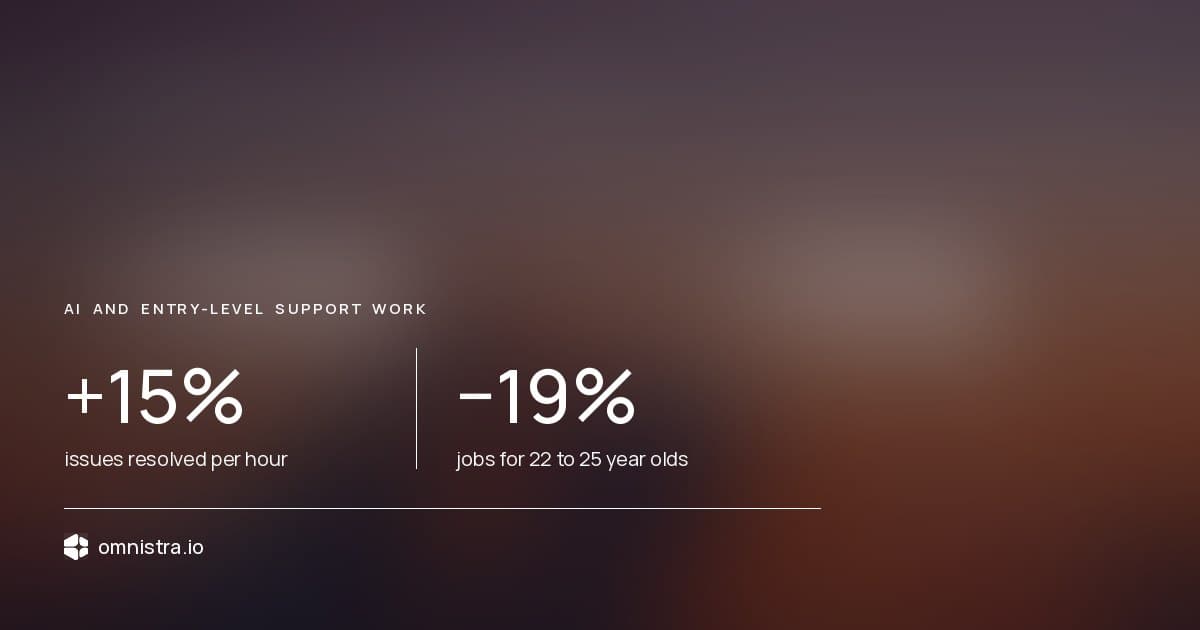
It does, and the most careful study we have is Brynjolfsson, Li and Raymond, published in the Quarterly Journal of Economics, volume 140, issue 2, in April 2025. It covers 5,172 customer support agents, which makes it far larger than most workplace studies you will see quoted. Access to an AI assistant raised issues resolved per hour by roughly fifteen percent.
But the average is the least interesting thing in the paper. The distribution is where the argument lives.
Less experienced and lower-skilled workers improved both the speed and the quality of their work. The most experienced and highest-skilled saw only small gains in speed, with some evidence of small declines in quality.
Read from a hiring chair, that says something quite specific. The technology is not a threat to your best agent. What it does is close the distance between your best agent and your newest one. Which sounds like good news, and for the person already sitting in the seat it largely is.
Does AI reduce entry-level hiring?
Here is the part that troubles me, and I have not found a way around it.
If someone in their first month now performs like someone in their third year, then a business needs fewer people in their first month. The total headcount may barely move. The entry point is what closes.
Stanford's Digital Economy Lab, working with ADP payroll records through June 2026, found employment among 22 to 25 year olds in the most AI-exposed occupations running about nineteen percent below where it would otherwise sit, measured against their less-exposed peers. The adjustment is happening almost entirely through hiring that does not occur, rather than through people being let go.
So nobody is fired, and nobody is hired, and the second half of that sentence shows up in no statistic anywhere. In Bangladesh it is invisible in the data completely, because we do not collect it.
How big is Bangladesh's call centre sector, and who works in it?
On the trade body's own published figures, as reported through 2025 and 2026, roughly 80,000 to 100,000 people work across something like 400 to 500 firms. Around forty percent of them are women. Entry pay sits near Tk 15,000 to 17,000 a month.
Those numbers matter less than what sits behind them. For a great many young Bangladeshis, and particularly for young women, a support job is not a career choice at all. It is the first formal, salaried, contract-bearing job available after graduation, in a country where graduate unemployment runs higher than for any other education level, and where a very large share of young women are not in employment, education or training of any kind.
The ILO has made this point in successive reports: clerical work in lower-income countries has historically been a pathway into decent work, particularly for women and young workers, and automation puts that pathway at risk.
So the thing at stake is not really the hundred thousand jobs. It is the on-ramp that leads to them.
The sector's own leadership has said something similar. Call centres will not disappear because of AI, but low-skilled call centre jobs will, and the question is whether the workforce is ready to move into more skilled, technology-driven work. That word whether is carrying an enormous amount. Getting people ready is somebody's job. At the moment I am not sure whose.
What we changed in how we hire
Three things, offered as one company's answer rather than as advice.
First, I wrote our support job description twice. The first draft tested how quickly someone could resolve a query, and I threw it out, because speed is exactly what stops being scarce. The work that survives is the work where the right answer is not obvious. So the interview now puts a situation in front of you with no clean policy fit, an angry customer with a legitimate grievance, and asks what you would do and why. I care about the why a great deal more than the answer.
Second, we kept the entry rung and moved it up. If AI compresses the experience curve, then deleting the junior role is simply the lazy response to it. People joining us start on conversation review, reading back what our agents said and marking what went wrong. That is genuinely useful work, it produces the signal the system needs to improve, and it puts someone new in front of a lot of real language very quickly. It is an apprenticeship, and it is a job.
Third, we wrote down what humans keep. Not as a value on a wall, as a list inside the workflow itself. Refund decisions. Complaints about a person. Anyone who sounds vulnerable. Anything the system has already failed once. Those go to a human by rule, not by an escalation score that somebody can quietly tune down later when the automation numbers need to look better.
On pay, since I think it is fair to ask: we benchmark above the entry band quoted above, because we are asking for judgment rather than throughput, and I would rather hire fewer people properly than more people cheaply.
If AI handles the easy calls, who trains the next generation?
This is the question I cannot answer, and I would like someone to.
Support floors have always taught judgment through sheer volume. You handled four hundred straightforward calls and somewhere in the middle of them you learned what a hard one sounds like. Take the four hundred away and the apprenticeship disappears with them.
Everyone in this industry, and I include myself, is currently drawing on experienced people whose expertise was built by a training method we are in the middle of dismantling. Whoever works out what replaces it will matter more to this sector than anyone shipping another model.
Does speaking Bangla protect Bangladeshi jobs?
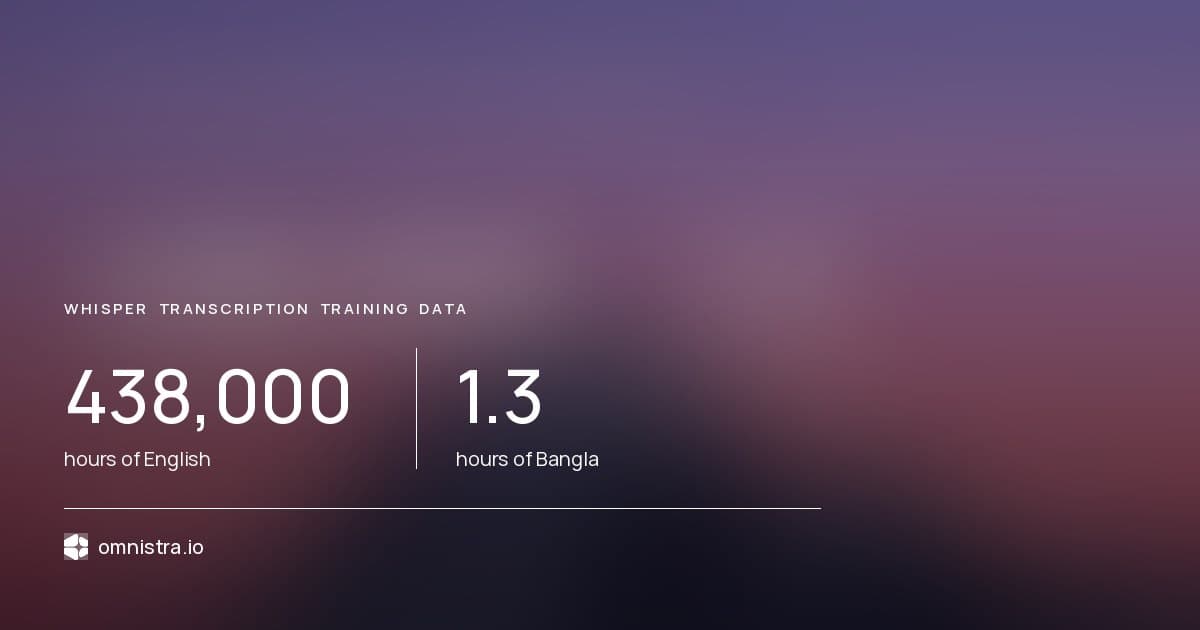
This gets said a little too comfortably at conferences. People say Bangla protects Bangladeshi jobs, on the grounds that a global system cannot serve Bangladeshi customers in their own language. I believe in that advantage and we are building on it.
But be precise about what it protects. It keeps the revenue in Bangladesh. It does not keep the headcount. An agent that speaks good Bangla will displace a Bangla-speaking worker just as efficiently as an English one displaces an English speaker, and anyone telling you otherwise is selling you something.
I would rather say that now than have someone else point it out later.
About the author
Arina Tasnim is a co-founder and Chief Human Resources Officer of Omnistra Private Limited, Dhaka, which builds Bangla and English voice and messaging agents and Order OS for cash-on-delivery commerce. Her company builds the technology discussed here.