Your Chatbot Replied. Your Parcel Still Came Back.
It is twenty to midnight and someone messages your Facebook page to ask whether the kurti comes in medium. Your chatbot answers in under a second, correctly, in perfectly decent Bangla. The customer places the order. Nine days later the parcel comes back to you unopened, and you pay both legs of the courier charge for the privilege.
The chatbot did its job flawlessly. That is precisely the problem. Bangladesh's e-commerce market was worth $6.6 billion at the end of 2022 and the Centre for Policy Dialogue projects it will reach $10.5 billion in 2026. An enormous amount of software is being sold into that growth under a single word, and the word is doing a lot of quiet work. It is worth being exact about what it covers, because the difference between a reply and a delivered order is not a matter of vocabulary. It is a matter of money.
A chatbot answers. An agent finishes the job.
A chatbot is a conversational interface. It receives a message, works out what was meant, and returns a good sentence. Everything it does happens inside the chat window, and it is judged on whether the sentence was right. Modern ones are genuinely impressive at this, and anyone who used the rule-based generation of 2019 will notice the difference immediately.
An AI agent is judged on something else entirely: whether the thing got done. It perceives a situation, decides what should happen next against rules someone wrote, then acts in real systems, and it can do all three without a person in the loop. It reads the order. It changes the order. It phones the customer. It books the courier. The conversation is one of its tools rather than the whole of its existence.
The cleanest way to hold the distinction: a chatbot is a very fast receptionist who is not allowed to leave the desk. An agent is the colleague who takes your question, walks to the warehouse, counts the shelf, calls the courier, and comes back with an answer and a changed situation.
This is not a distinction invented by marketing departments, and the industry has already priced it in. In March 2025 Gartner predicted that agentic AI will autonomously resolve 80 percent of common customer service issues without human intervention by 2029, and cut operational costs by 30 percent doing it. That forecast is not about better sentences. It is about resolution, which is a word that only means something if the software can act.
The four walls, and exactly where each one is
A chatbot in Bangladesh runs into four walls, quickly. None of them are any vendor's fault. They are limits of the category, and knowing where they sit is the whole of the buying decision.
The first wall is the telephone. Confirming an order by phone before dispatch is close to universal in f-commerce, and for an extremely good reason: automated pre-dispatch confirmation is the single strongest intervention on record, cutting returns by 20 to 30 percent. A text bot cannot make that call. It cannot take one either, and imo alone logged 91.6 billion calls in Bangladesh in a year, so this is not a legacy channel politely declining. It is where the market lives.
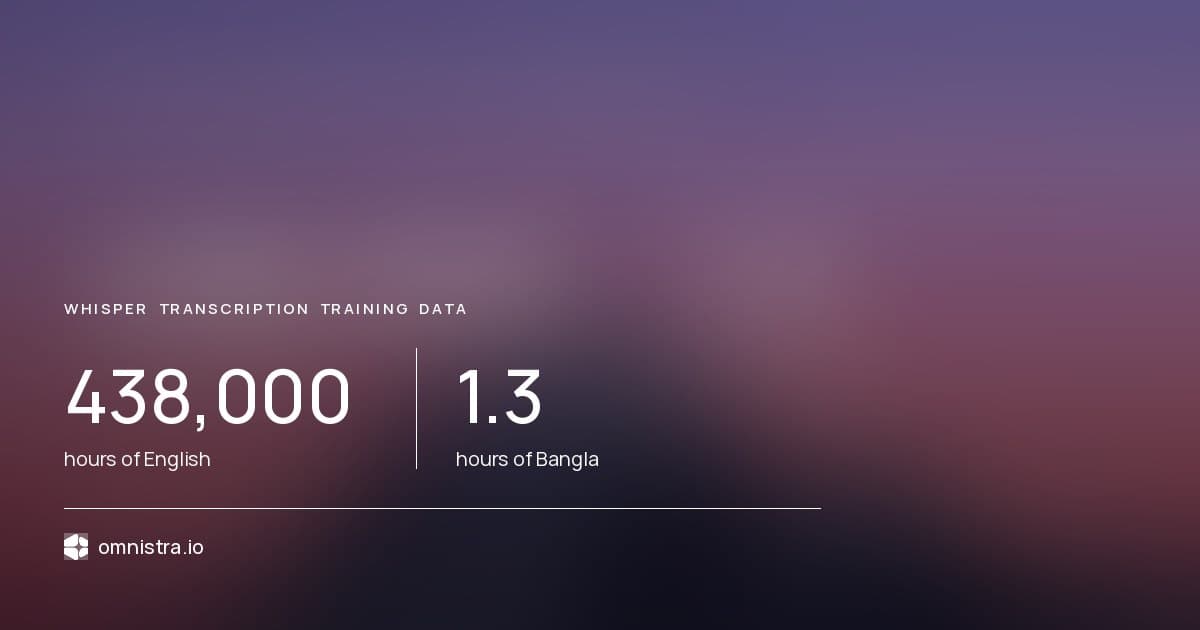
The second wall is Bangla, and this one is more technical than most vendors admit. Bengali is the seventh most spoken language on Earth and among the most under-resourced in speech AI. Whisper, the transcription model a great deal of the market quietly builds on, was trained on roughly 438,000 hours of English against 1.3 hours of Bangla. That ratio is not a rounding error, it is four orders of magnitude, and it is why the demo in a quiet room and the reality of a customer talking fast on a bad line from Mirpur are two different products.
The third wall is the order itself. The most expensive question in Bangladeshi commerce is where is my order. Buyers check their order status 4.6 times per purchase and 43 percent check every single day until it arrives, and Gorgias measures the question at around 18 percent of all support tickets across its merchant base. A chatbot can say let me check for you. Answering it properly means reading the courier's live status, knowing which courier is holding the parcel, and being able to do something about the answer. That is order operations wearing a conversation as a coat.
The fourth wall is cash on delivery, and it is the wall that costs the most. Around 75 percent of Bangladeshi e-commerce is paid in cash at the door. Meesho's audited IPO filings show 75.5 percent delivery success on COD orders against 97.8 percent on prepaid: same products, same couriers, same customers, a 22-point gap that is purely a function of how the promise was made. Pathao prices a failed parcel at roughly Tk 195 across both legs. GoKwik, which scores COD risk across 180 million shoppers, attributes 60 to 70 percent of returns to low buying intent rather than any delivery failure at all.
Read that last number again, because it reframes the entire problem. Most returns are not logistics going wrong. They are conversations that ended too early. And a reply box, by construction, has no view of what happened after the conversation ended.
What changes the moment the software can act
An agent closes the loop the chatbot leaves open, and the published intervention data shows what that is worth. Automated confirmation before dispatch cuts returns 20 to 30 percent. Taking a partial advance through mobile money cuts them by up to 55 percent, because a customer with Tk 100 already committed answers the rider's call. Both of those are actions, not answers.
Bangladeshi sellers know this perfectly well, which is exactly why the confirm-everything phone ritual exists in the first place. The ritual is not irrational. It simply does not scale. At fifty orders a day it needs one person doing nothing else; at two hundred it needs a shift plan and someone to manage it. So most stores quietly stop calling, and the return rate drifts back toward the industry band, and everyone blames the courier.
The interesting move is not to abandon the ritual or to hire around it. It is to automate the ritual itself, which requires software that can dial a phone, hold a conversation in the customer's language, understand the answer, and then write the result back onto the order. Every one of those four verbs is outside what a chatbot is.
Seven questions that end a sales call in ninety seconds
Ask these before anyone shows you a pricing page. The answers sort the market faster than any feature grid.
1. Can I hear a recording of your system on a real call, in Bangla, with a customer who interrupts it?
2. Does it make outbound calls, or does it only answer inbound messages?
3. Can it read my courier's live delivery status, or does it only read my product catalogue?
4. What happens when it does not know? Who does it hand to, how fast, and does that person see the whole conversation?
5. Can it confirm an order before dispatch and request a partial advance?
6. What does it do with the conversation afterwards? Is there anything I can review, classify, or measure a month later?
7. What does this cost when my volume triples?
A vendor selling a chatbot will answer one, two, and possibly four. If the answers to three, five, and six are vague or aspirational, you are being sold a reply box with a confident roadmap. That may still be the right purchase. Just buy it knowing what it is.
What we built, and what it actually does
Omnistra is the operating infrastructure of autonomous commerce: an AI workforce that runs customer service, omnichannel support, and inbound and outbound sales end to end. It is built in Dhaka, which is relevant less as a flag than as a constraint, because a system designed here has to survive cash on delivery, four competing couriers, Messenger as a storefront, and customers who switch between Bangla and English inside a single sentence.
The agents speak Bangla and English natively and work across more than 60 other languages. They answer on Messenger, WhatsApp and the web, and they make and take phone calls, which is the capability most of the market skips because voice is genuinely hard.
Underneath the conversation sits the part that makes it an agent rather than an interface. A visual workflow engine governs what may happen next, so behaviour is something a human wrote down and can inspect rather than a prompt and a hope. Order OS holds the order and the courier status together, so where is my order is answered from the record instead of a promise to look into it. Campaigns runs the outbound work, including pre-dispatch confirmation, failed-delivery recovery and post-purchase follow-up. Every conversation is classified against a taxonomy of more than a hundred tags, tracked for emotional trajectory while it is still happening so a souring call can be escalated before it becomes a complaint, and analysed after it ends so the whole thing is measurable rather than merely busy.
It integrates with Shopify and WooCommerce, and connects to Zendesk, Intercom and Salesforce where a team already runs on those, because an agent that cannot reach the systems a business already trusts is just another window to keep open.
When a chatbot is genuinely the right answer
This is not an argument that chatbots are bad. It is an argument that they are a component being sold as a system.
If your orders are prepaid, your inbox is mostly product questions, and nobody in your operation is picking up a phone to confirm anything, then a good chatbot with solid Bangla is the correct purchase and an agent platform is overkill. Buy the cheapest one that handles your language well and spend the difference on advertising.
The moment cash on delivery enters the picture, the calculation inverts, because the expensive events all happen after the conversation ends and outside the chat window. That is the line. It is not about how clever the model is. It is about whether the software is allowed to leave the desk.
Every figure in this piece is from a named source and was checked on August 14, 2026. If any of it is wrong, we would rather know: contact@omnistra.io.